AI Spend Reporting for Engineering and Finance Stakeholders
Engineering and finance need different AI spend data to manage costs effectively.
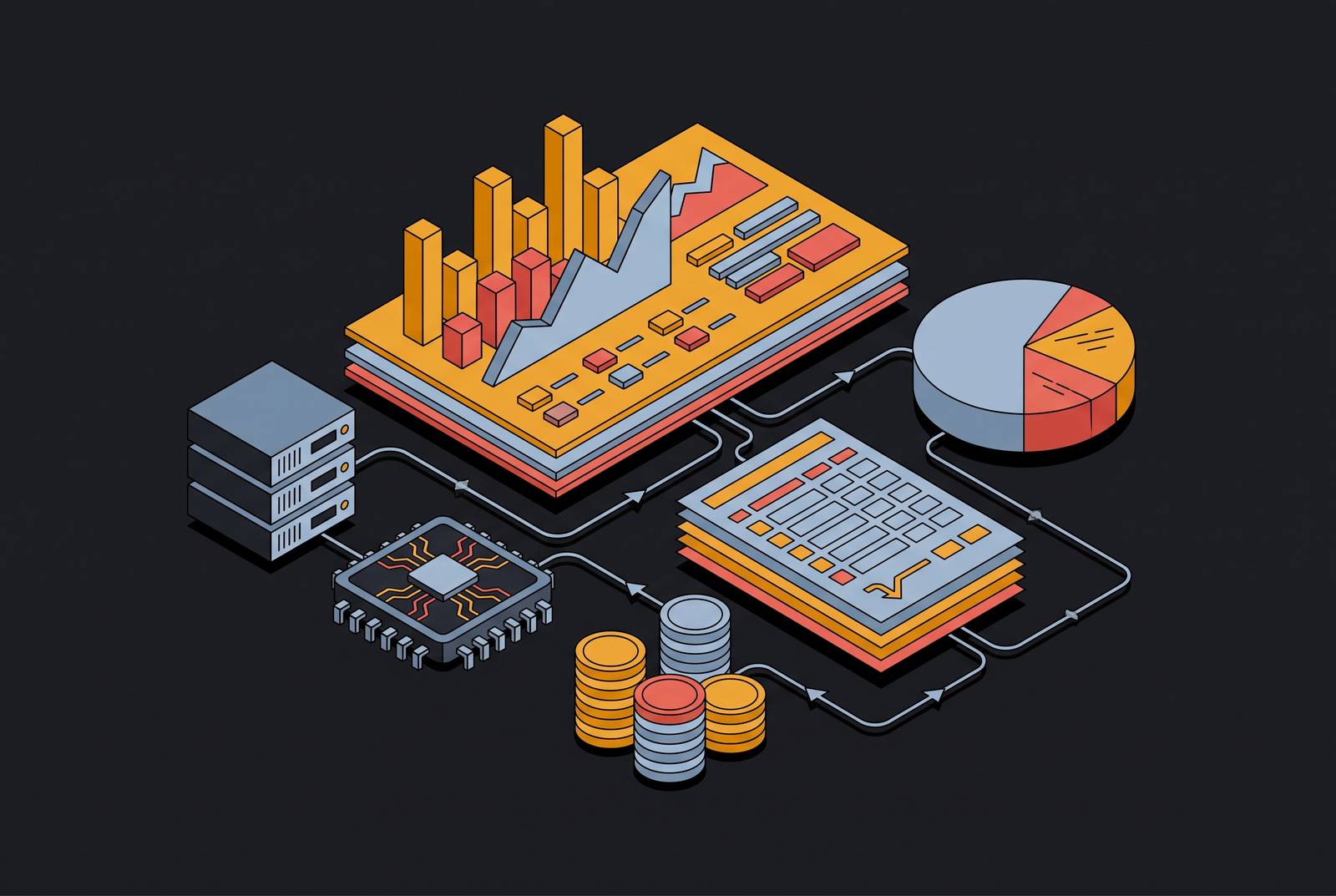
Picture the same month of AI spend landing on two desks. An engineering lead pulls up the gateway logs and sees a clean picture: fallbacks fired twice, latency stayed inside SLA, token usage tracked with traffic. Down the hall, a finance lead pulls up the vendor invoice and sees a number that's over budget with no explanation attached. Both people are looking at the same underlying activity. Neither is wrong. That's the problem.
Engineering and finance are asking structurally different questions. They're asking structurally different questions, and the gap between those questions is where budget overruns quietly take root. Engineering wants to know which model handled a given request, how many tokens it burned, whether a fallback kicked in, and whether latency held inside its service-level agreement. Finance wants to know which team or project spent what, whether it's tracking against budget, what it costs per unit of value delivered, and who signed off on it. Those aren't competing versions of the same question. Models bill per token in and per token out, with prompts, context windows, retrieved documents, and responses all counting, so two teams solving the same problem can differ by an order of magnitude in cost based purely on how they built the workflow.
The mismatch appears in SpendHound's 2026 AI Spend Report, which surveyed finance and procurement leaders and found that nearly half exceeded their AI budgets in 2025, and more than half either doubted they were paying a fair price or simply didn't know. It reflects a translation gap between the team generating the spend and the team accountable for it. Zylo's 2026 SaaS Management Index backs this up from the other direction: AI-native spend inside large enterprises has climbed sharply, and ChatGPT is now the single most-expensed app across Zylo's customer base. Finance is seeing AI show up on the ledger. It just isn't seeing it with enough detail to actually manage it.
Neither team's request is unreasonable. Most organizations produce one kind of data, usually engineering's, and expect the other team to reverse-engineer what it needs from that, a mismatch built into the architecture both teams operate within. Finance ends up inferring budget answers from token logs never built for budget questions, which is the gap this piece is built to close.
How AI costs behave differently from other software costs finance has managed
Software licensing trained finance teams to think in seats, tiers, and annual contracts. AI spend breaks every one of those assumptions, and the instincts built for SaaS procurement don't transfer cleanly to a cost structure that moves with usage and design choices made inside engineering, not procurement.
Start with how the billing actually works. Models charge per token in and per token out: prompts, context windows, retrieved documents, and generated responses all count against the bill. Two teams can solve the exact same business problem and land an order of magnitude apart in cost, purely because one built a leaner workflow than the other. There's no seat count to audit here. The cost is a function of design decisions made in a pull request.
Multi-step AI agents make this worse. A single user action can trigger a chain of model calls and tool calls, and that chain compounds spend in ways nobody notices until the invoice lands. Gartner projects sharp growth in enterprise applications integrated with task-specific AI agents by the end of 2026, climbing from a small base today. Every agent added to a workflow multiplies the call volume something has to govern. It's already the shape of the spend finance teams are trying to reconcile this year.
Running a premium model on a task that a cheaper model could handle just as well raises the bill without adding proportional value, and that decision gets made by an engineer choosing a default, not by anyone in procurement. Multiply that across a workforce: worldwide spending on AI models and platforms is set to grow substantially through 2026. For most enterprises, all of it still lands as a single line on a vendor invoice.
The metric that actually matters here is cost per task, per workflow, or per resolved ticket, measured against whatever process the AI replaced. A workflow whose token bill doubled while it handled triple the volume got cheaper in real terms, even though the invoice went up. No vendor bill will tell finance that. The conclusion only becomes visible with request-level data that connects spend to the work it produced, data a single invoice line can't supply.
What engineering needs from spend data, and why provider dashboards fall short
Engineers can't optimize a system they can't attribute, and provider dashboards hand back aggregate billing figures at precisely the wrong resolution for running production AI.
What engineering actually needs looks granular by design: which model served a given request, which team or virtual key issued it, how many tokens each step of a multi-step workflow consumed, whether a fallback fired and which provider absorbed the traffic, and how latency behaved under load. Provider dashboards weren't built for that. They report consumption aggregated by API key, which is fine for paying the bill and useless for figuring out which agent workflow is burning through budget or whose prompt has ballooned in size.
The problem multiplies once traffic spans providers. A team running traffic across OpenAI, Anthropic, and Google simultaneously, common in any multi-provider routing architecture, has no native cross-provider view, with each dashboard its own silo. Each one is its own silo. Reconciling spend across providers means stitching together exports by hand, which is slow and error-prone precisely when speed matters most.
Production gateway evaluations from 2026 treat cost attribution by user, team, or project as a baseline requirement, not an optional extra. Without it, engineering can't answer finance's question even when it wants to. The practical consequence: when finance asks which team overspent, engineering has to reconstruct the answer from raw logs after the fact, well after the overage already happened.
Ramp's internal practice of testing new models against real workloads and routing eligible requests to the cheapest model that still clears a quality bar shows what's possible once this data exists. That kind of routing only works if every request carries its own known cost, which makes attribution the prerequisite for optimizing anything.
What finance needs from spend data, and why engineering's telemetry isn't enough
Finance doesn't need more raw telemetry sitting in a log file somewhere. Finance needs that telemetry translated into the structures governance actually runs on: budgets, teams, projects, and cost centers.
Finance operates on cost centers, budget lines, approval workflows, and variance reports, none of which map naturally onto model names, token counts, or provider API keys. Handing a finance team a token-level export just moves the translation work downstream. It just moves the translation work downstream. What finance actually needs is spend rolled up by team, project, or business unit; hard budget thresholds enforced before an overage happens rather than flagged after the invoice arrives; a cost-per-workflow metric tying AI spend to business outcomes; and an audit trail solid enough for procurement review and, in regulated industries, compliance attestation.
Shadow AI makes all of this harder to trust. A 2026 CloudEagle.ai guide points out that policy enforcement has to translate written policy into real-time controls, and that gateways can miss shadow AI traffic that routes around them entirely. If unsanctioned tools are in play, the spend finance can see might be a fraction of what's actually happening. That's a structural risk that undermines governance even when every team involved is acting in good faith.
SpendHound's finding, that a large share of finance and procurement leaders either doubted they were paying a fair price or didn't know, reflects a data-availability problem rather than a competence one. The data that would settle the question already exists. It's sitting in engineering's telemetry layer, untranslated, waiting for someone to connect it to a budget line.
Virtual cards and approval workflows can block an unsanctioned purchase at the point of procurement, but none of that governs token consumption once a tool has already been approved. Finance needs a continuous view of ongoing usage, beyond a gate at the moment of purchase.
The shared data layer: why the gateway is where it belongs
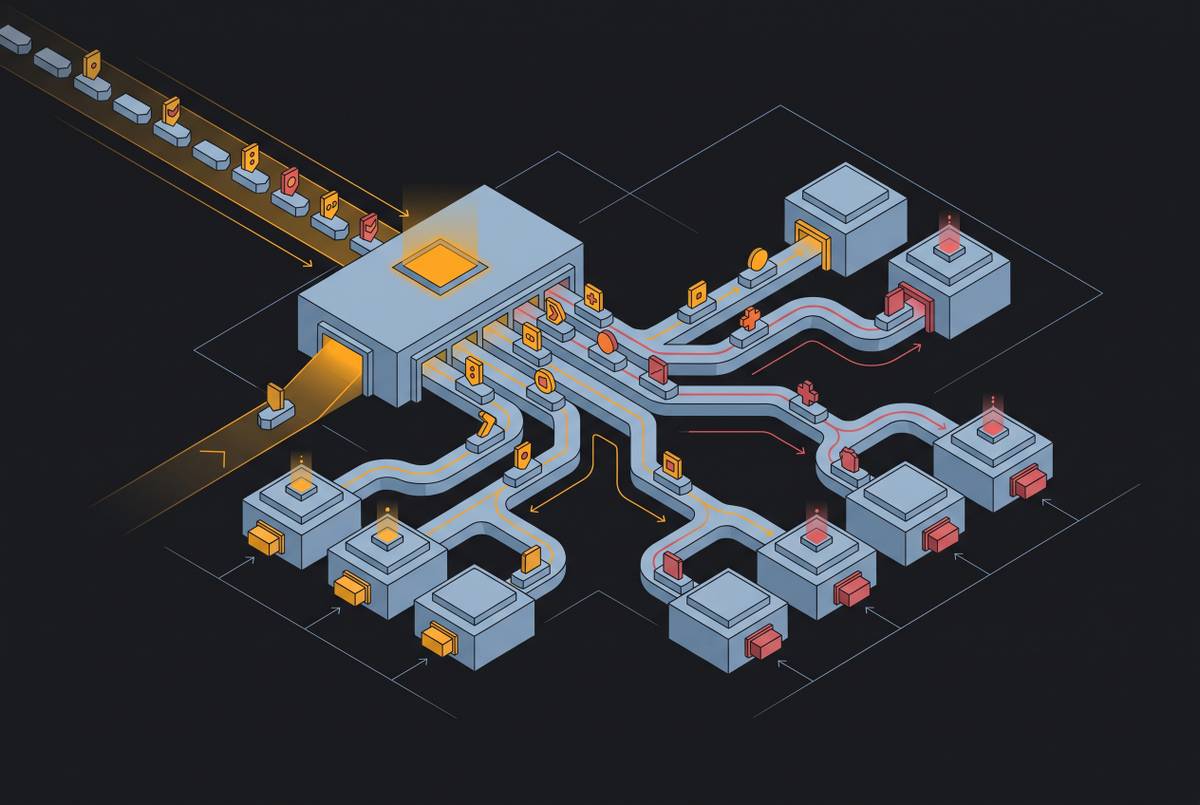
Every argument so far points at the same architectural conclusion. The LLM gateway is the only point in the AI stack where request-level telemetry and organizational accountability can be enforced at the same time, which makes it the natural home for a reporting layer that serves engineering and finance without forcing either one to translate for the other.
Start with where a gateway physically sits. It sits between applications and model providers and processes every request that passes through, making it the only layer in the stack that sees all traffic regardless of which provider serves it or which team issued the call. That vantage point is structural. It's the one place upstream of the provider silos discussed earlier and downstream of every engineering decision that shapes cost.
The architecture that makes this workable separates the control plane from the data plane. Authentication, authorization, rate limiting, and cost tracking run in-memory at the gateway itself, and in high-performance, compiled-language gateways that adds sub-millisecond overhead per request, though the actual overhead varies a good deal by implementation. Governance doesn't slow the system down when it's built this way. It runs alongside the request rather than after it.
A virtual key scopes a budget, a rate limit, and an access policy to a specific team, project, or customer, so every request tagged to that key gets attributed automatically to the right cost center, with no log-reconstruction required after the fact. That single mechanism is what turns engineering's token-level telemetry into finance's budget-line accounting, without either team doing manual translation.
Hard enforcement is what separates visibility from control. Blocking a request once it crosses a threshold, rather than sending an alert after the invoice shows up, is what actually stops an overage instead of just reporting on it later. Zuplo's 2026 AI gateway evaluation names hierarchical budget controls, enforced automatically at the organization, team, and application level, as a requirement for production AI gateways, not an add-on feature.
The gateway also closes part of the shadow AI gap raised earlier. Any traffic that actually routes through the gateway is governed traffic. The residual risk is whatever bypasses it entirely, and that's a policy and access-control problem, one the gateway's SSO and RBAC integration is built to close.
Then there's the audit trail. Logs generated at the gateway capture model version, policy applied, redaction action, and timestamp, per NIST AI RMF Manage function guidance.
What good AI spend reporting looks like in practice
Architecture only matters if it produces something usable. A shared reporting layer earns its keep by delivering the right data, at the right resolution, to each audience, without requiring custom engineering work to bridge between them.
For engineering, that means real-time token metering broken out by model, provider, virtual key, and workflow step; latency data that separates gateway overhead from the provider's own response time; fallback logs showing when and why traffic rerouted; and cost-per-request attribution precise enough to make an optimization decision traceable back to its source. RouteLLM, research out of UC Berkeley, Anyscale, and Canva published at ICLR 2025, showed that routing simple queries to smaller models can cut overall LLM spend substantially on standard benchmarks while keeping most of a frontier model's response quality. None of that savings is reachable without per-request cost data telling engineering which requests are even candidates for downrouting. A 2026 practitioner benchmark across a wide range of models found a striking spread in cost-to-quality profiles, with Gemini 2.5 Flash posting strong quality at a very low cost per run. That kind of spread is only useful information if the system attributing cost updates in real time, since a static, once-a-quarter model choice can't adapt to it.
For finance, the requirement set looks different. Spend needs to roll up by team, project, business unit, and time period. Budget thresholds need hard enforcement paired with forecasting that flags a likely overage before the invoice arrives, not after. A cost-per-workflow view has to connect token spend to the business process it supports, and records need to export cleanly enough for procurement review and compliance attestation. Real-time, granular visibility, by team, project, key, model, and provider, means finance stops waiting for the end-of-month invoice and stops reconstructing spend by asking engineering to pull logs.
Some capabilities serve both audiences directly.
PII redaction at the gateway belongs here too, and it matters to both sides for different reasons. Engineering needs confirmation that redaction fired and a record of what it removed. Finance and compliance need the audit trail proving sensitive data never reached a provider's systems. Both OpenAI and Anthropic retain API data by default for a limited window, and zero-data-retention terms require an enterprise contract, so gateway-level redaction matters regardless of what retention terms a given provider offers. Latency is part of this evaluation too: on-gateway redaction benchmarks show regex-based approaches adding under 2 milliseconds, named-entity-recognition models running around 35 milliseconds, and external PII APIs running near 180 milliseconds. Which one fits depends on the workflow's own SLA, not on picking the most thorough option by default.
Access control underlies all of it. RBAC and SSO at the gateway level, scoped per team and per project, are what let finance actually trust the spend data it's looking at. Attribution is only as reliable as the access controls that produced it.
How leading gateway options handle spend reporting today
The gateway market has matured to the point where the interesting question is how well a tool tracks spend, not whether it can. Every serious option can do that now. The real evaluation criteria are how granularly a gateway attributes cost, how strictly it enforces budgets, and whether its reporting layer was actually built to serve both engineering and finance, or just the audience that happened to buy it.
Open-source gateways written in compiled languages tend to hold their attribution accuracy steady under real production load, since virtual keys enforce budgets and rate limits hierarchically at the key, team, and customer level, and low per-request latency overhead holds even at high sustained throughput. A compiled-language runtime keeps overhead consistent under sustained concurrency in a way interpreted-language alternatives often don't. For spend reporting specifically, that consistency is what makes the telemetry trustworthy under real traffic, not just in a clean benchmark. Self-hosted or in-VPC deployment, broad provider support, and native integration with monitoring stacks through OpenTelemetry and Prometheus round out what a serious engineering team would look for, alongside support for governing agentic tool traffic as multi-step workflows become more common.
Python-based open-source proxies take a different tradeoff. Broad provider coverage across 140+ LLM APIs in an OpenAI-compatible format makes onboarding straightforward, and cost-based routing picks the cheapest deployment for a given request but does not optimize for cost-per-quality. That routing optimizes for price alone, though, not for cost relative to quality, and latency tends to degrade under sustained high concurrency compared with compiled-language alternatives. For teams running moderate traffic with straightforward routing needs, that tradeoff may be entirely acceptable. For teams running agentic workflows at real production volume, where every added call compounds both cost and latency risk, the runtime choice underneath the gateway becomes part of the spend-reporting decision itself.
Choosing between these approaches comes down to matching the gateway's actual throughput and attribution model to the shape of the traffic running through it, engineering's need for per-request granularity, and finance's need for enforcement that holds under real load, together, from the same underlying data.