Chargeback Policies for OpenAI and Anthropic Spend That Finance and BU Leads Will Actually Agree On
Gateway attribution tags let finance track AI spending by team before costs hit budgets.
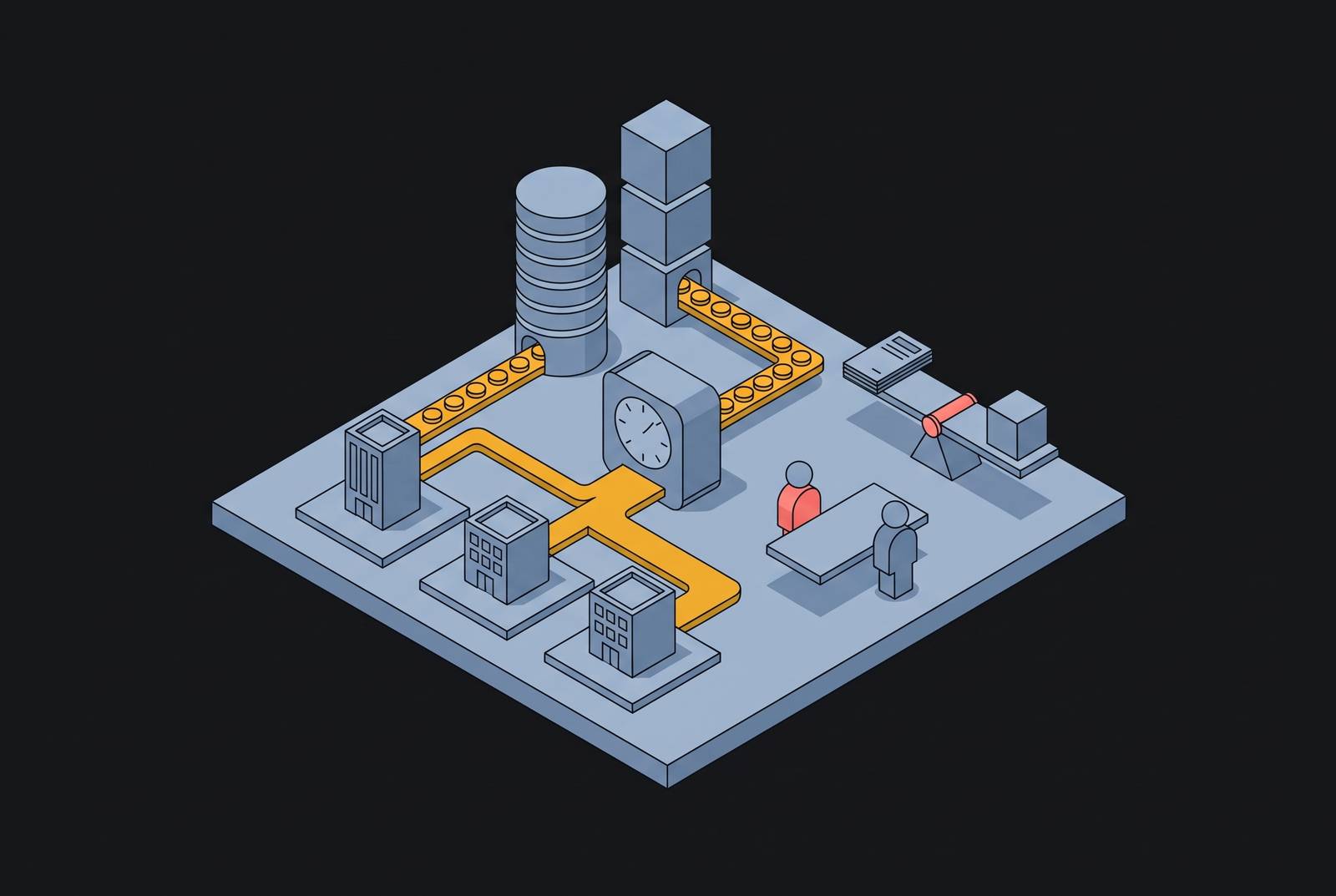
To track OpenAI and Anthropic costs in real time by team and project, route requests through an LLM gateway that requires attribution tags and records spend by model and provider. Finance and BU agree to chargeback policies when those records show effective costs, match provider invoices, and go through showback before the costs reach team budgets.
Why native OpenAI and Anthropic billing leaves finance with almost nothing to work with
Anthropic groups usage by workspace and API key, while its cost reports group by workspace and description, including model, service tier, cost type, and inference geography. OpenAI provides cost groupings by project, API key, user, line item, and API source. Neither provides user-defined resource tags for financial attribution. These dimensions show activity at the provider but may leave out who owns the budget. For feature-level and customer-level attribution, teams therefore need to add their own data.
A shared provider key makes that gap consequential. One key can serve dozens of teams and thousands of agent loops, so allocating its subtotal among teams produces an estimate. Anthropic’s documentation states, “You can't set spend limits on the default Workspace”. Spend left there without a team owner cannot be charged back. OpenAI production services likewise need their own projects to preserve attribution. Finance needs line-item costs by team, project, or customer, but provider subtotals cannot reconstruct ownership that was never recorded. Attribution must start before the request reaches the provider.
Why token costs are harder to forecast than any other software expense
Even when usage is tagged to the right owner, it is hard to forecast because token consumption varies from seat to seat. One heavy agentic user can consume tokens at a rate orders of magnitude above a typical user. Team averages conceal that difference. A budget based on chat-era usage becomes unreliable as agents begin making repeated calls, and a retry bug or recursive call can exhaust a month’s budget in hours.
Pricing changes create a separate source of variance. Anthropic began moving Claude’s enterprise plans toward dynamic usage pricing in late 2025 and officially introduced it in February 2026. Heavy users can consequently face a much larger bill without changing application code. Last quarter’s rate is not a durable forecast. Finance must distinguish changes in price from changes in workload when assessing increases in spending.
Retention terms also constrain the evidence available for reconciliation. Zero-data-retention agreements with OpenAI and Anthropic need approval from each provider’s sales team before they can take effect and cannot be turned on through self-service activation. They are not the default on pay-as-you-go plans, although Anthropic can apply them to pay-as-you-go API keys in some cases. Compliance requirements therefore enter the accounting design as well as the application design.
Why engineering teams cannot solve the tagging problem alone, and why a central enforcement point is the only way out
Application-level tagging relies on every engineer getting the same financial rules right. Requests need metadata such as feature_id, team, and customer_id, but provider APIs do not require those tags. An untagged request still succeeds and incurs cost. Each new service, engineer, and agent adds another place where the convention can be missed. Engineering can implement attribution, but individual discipline cannot substitute for enforcement.
An LLM gateway supplies that enforcement point between applications and providers. When every request passes through it, required metadata can become a routing condition. Missing tags prevent the request from going through. The gateway also sees calls across agent loops and providers, giving allocation a common source of record.
Production AI workloads need token-based rate limiting, multi-provider routing, and spend tracking because the number of requests counted by traditional request-count-based API gateways alone cannot show how much they consume. Attribution belongs at the same boundary as these controls. Finance defines the ownership rules, engineering implements them, and the gateway applies them consistently. That leaves a concrete design question before deployment, namely which tags establish ownership and how they roll up into budgets.
What to tag and how to structure the attribution hierarchy before you write a chargeback policy
Finance and engineering should agree on a four-tier hierarchy before the gateway enters production. The levels are organization, team, project, and agent or feature, with every request including all four as metadata. Team attribution is the minimum needed to identify a budget owner. Project attribution gives product managers a way to isolate product or customer-segment costs, while agent attribution lets engineering find a single workload that has distorted a team’s total. Customer-level allocation also requires customer_id where that attribution is needed.
Consider a healthcare startup with two AI workloads. One team runs a patient-triage agent, while another runs a coding assistant. Both requests share an organization tag but have distinct team, project, and agent or feature tags. Finance can then post patient-triage spend to its owning team without assigning any coding-assistant cost to it. If the triage agent’s consumption rises unexpectedly, engineering can check that agent to find out why, instead of leaving the organization with an unexplained increase in costs.
Every production service needs a named workspace or project, followed by finer tagging at the gateway. Anthropic’s Default Workspace cannot have spend limits, while OpenAI’s default project supports spend limits but does not allow members or service accounts to be added directly. The gateway must block routing when required tags are missing. Retrofitting this schema onto running services is harder and leaves historical requests without the attribution needed for reconciliation.
How to charge the right rate — effective cost, not list price — and why it changes what teams see on their bill
Effective cost is the price actually paid after caching, batch, and channel discounts. Charging list price can penalize efficient teams and subsidize wasteful ones. Semantic caching makes the distortion concrete because the gateway can return a cached response for a semantically similar query. A team billed for provider tokens that response did not consume loses the financial benefit of its cache hits.
The gateway records the inputs needed for effective-rate billing, including actual token counts, provider, streaming or batch channel, and caching events. Each team’s bill should show its cache hit rate with its effective cost so that the benefit of efficient usage remains visible. This makes optimization financially legible to the owner. Finance’s need for a standard budgeting rate is addressed by using the effective rate as the basis for team budgets, with gateway spend limits enforcing those budgets during operation.
BU leads need a further translation from consumption into output. Cost per resolved support ticket, cost per code review, or cost per customer session shows how token spending pays for the work the business gets. Token totals alone cannot support that comparison well. Unit economics lets a BU lead discuss whether the output from a more expensive workload is worth its cost, with the model price tied to what it does for the business.
Showback before chargeback — the sequencing that gets finance and BU leads to trust the numbers
BU skepticism about allocation is rational when previous cost allocations have been wrong. Moving money before owners can check the evidence turns tagging errors into disputes over budgets. The gateway reports each team’s costs, but finance neither moves money nor posts those costs to its budget. Owners can challenge a line item before it becomes a charge.
The rollout should include at least one billing cycle of showback for existing services. During that cycle, finance and engineering should repair tagging gaps, reconcile gateway totals against OpenAI and Anthropic invoices, and agree on the unit-economics translation. Reports of costs by team each week show gaps before the cycle ends. A clear dispute path should let a BU lead flag a misattributed line, trace it to a tagged request in gateway logs, and have the tagging corrected. Trust comes from that evidence and correction process.
Reconciliation is the condition for moving to chargeback. Finance needs a report that aligns gateway-reported spend with actual provider invoices, and any difference must be investigated and resolved before posting begins, including untagged requests it exposes. Once owners trust the numbers, production features can move to monthly budget postings. New AI features launched during showback can go directly to chargeback once the tagging schema is validated. They do not need to inherit a waiting period intended to repair incomplete attribution in existing services.
How to track AI spend in real time by team and project and stop runaway agents
Gateway budget limits should be set for each team, project, and agent so that routing stops when enforcement thresholds are reached. They are not guarantees against every overrun. Teams should set limits conservatively to account for requests already in flight. This separates an operational control from an alert that merely announces costs after they have accumulated.
Anomaly detection and token-based rate limiting address the workload behind that spend. Two requests to the same endpoint can differ by orders of magnitude in token consumption, making request-count limits a poor proxy for financial exposure. Recursive agent loops and misconfigured retries need attention while they are running. Real-time anomaly alerts remain necessary regardless of the reporting cadence. These signals show engineering where workloads are going wrong and warn finance that spending could exceed the budget before invoice reconciliation.
Real-time AI spend tracking needs five dimensions, namely team, project, API key, model, and provider. Together they support both ownership and disputed-line reconciliation. Provider visibility is particularly useful when a fallback routes requests to a more expensive provider for the same model family. The team still owns the workload, but finance can distinguish a routing-driven increase from increased consumption. A team subtotal alone cannot make that distinction.
Concentrate AI provides real-time spend tracking by team, project, key, model, and provider while routing across models from a large number of providers. Its no-platform-markup model is relevant to effective-rate billing because a gateway premium does not distort the token prices teams see.
How to present AI spend to finance and BU leads in a format they will actually act on
Finance needs total cost by team per period, variance from budget, and a reconciliation line tying gateway totals to provider invoices. That is a financial statement. BU leads need cost per unit of business output, its trend over time, and an anomaly flag when their team’s spending departs from expectations. Engineering needs the operational detail, including cost by model, provider, and agent, plus cache hit rate and latency. These are different views of the same records.
The chargeback report should mirror the BU’s budget structure. If a BU has three product lines, it should receive three cost lines. Finance may prefer standardization for predictable cost, while engineering wants the best output for each task. Allowed-model lists that the gateway enforces for each team let it route by cost or quality among the models on those lists, so different workloads can use different models.
The signed-off policy should specify the attribution hierarchy, required tags, budget owners, effective-rate method, and business-output units used in reports. It should also record the reconciliation and dispute process, spend thresholds with allowance for in-flight requests, allowed-model rules, and the reporting cadence. Weekly showback reports, monthly chargeback postings, and real-time anomaly alerts serve distinct purposes. The gateway enforces the technical side of this governance agreement. Finance, BU leads, and engineering must agree to its rules before the first bill is posted.