The Invoice-Free Workflow for Monitoring AI Project Spend the Moment Tokens Are Consumed
Intercept every token request to track spend by team and project before bills arrive.

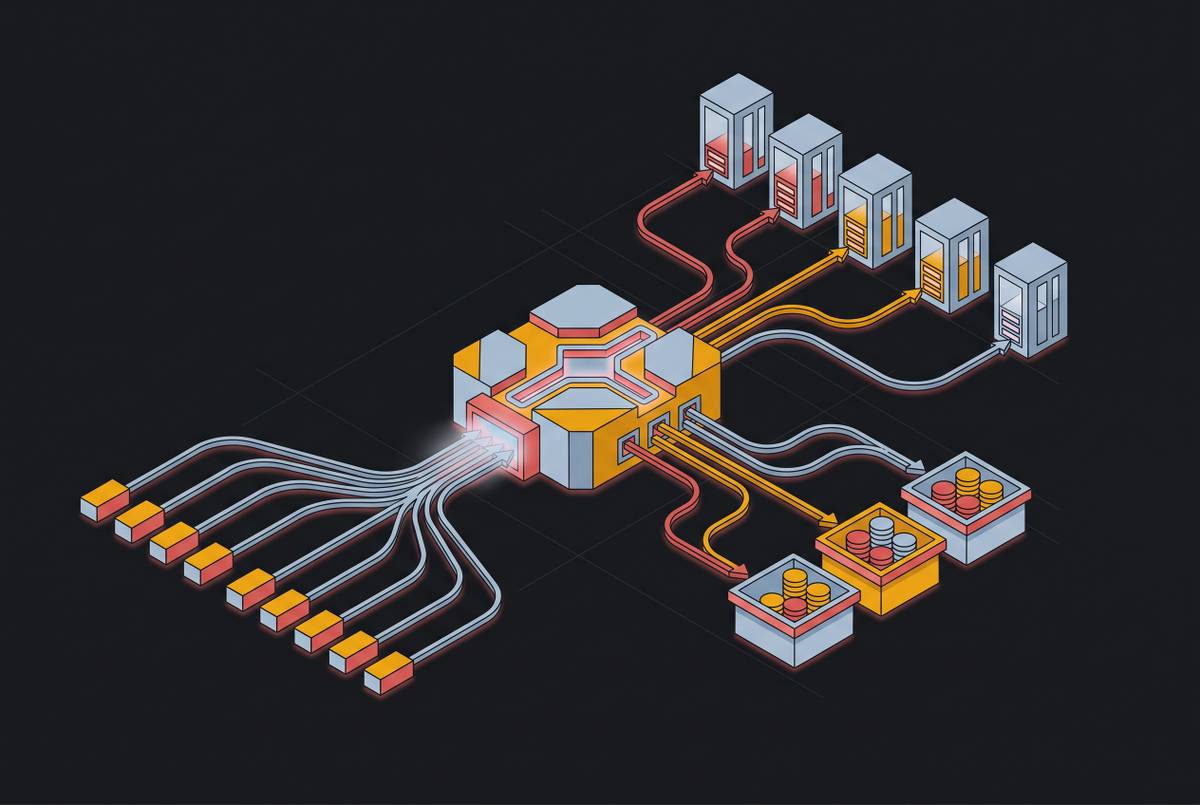
Real-time AI spend tracking requires an LLM gateway between applications and model providers, recording token consumption and cost against team, project, key, model, and provider as requests run. This replaces invoice-based reconstruction with per-request attribution and request-path controls. The underlying failure is architectural, because billing records arrive after the opportunity to identify and control the spending.
Why invoice-based AI cost tracking is an architectural failure, not a billing inconvenience
The invoice arrives, and nobody can explain the number. Engineering can identify the providers it used, but the total does not show which agent, team, or feature drove the increase. When applications use OpenAI, Anthropic, Gemini, and Bedrock, separate invoices arrive on separate schedules. Those records offer no native cross-provider view of what a project cost.
The missing element is a trace. Even an on-time invoice cannot recover attribution metadata that was never recorded with the request. Meanwhile, a recursive agent loop or runaway workflow can exhaust a budget in hours. A bill delivered weeks later documents the consequence without providing a control at the point where consumption occurred.
What a gateway layer actually does and where it sits in the request path
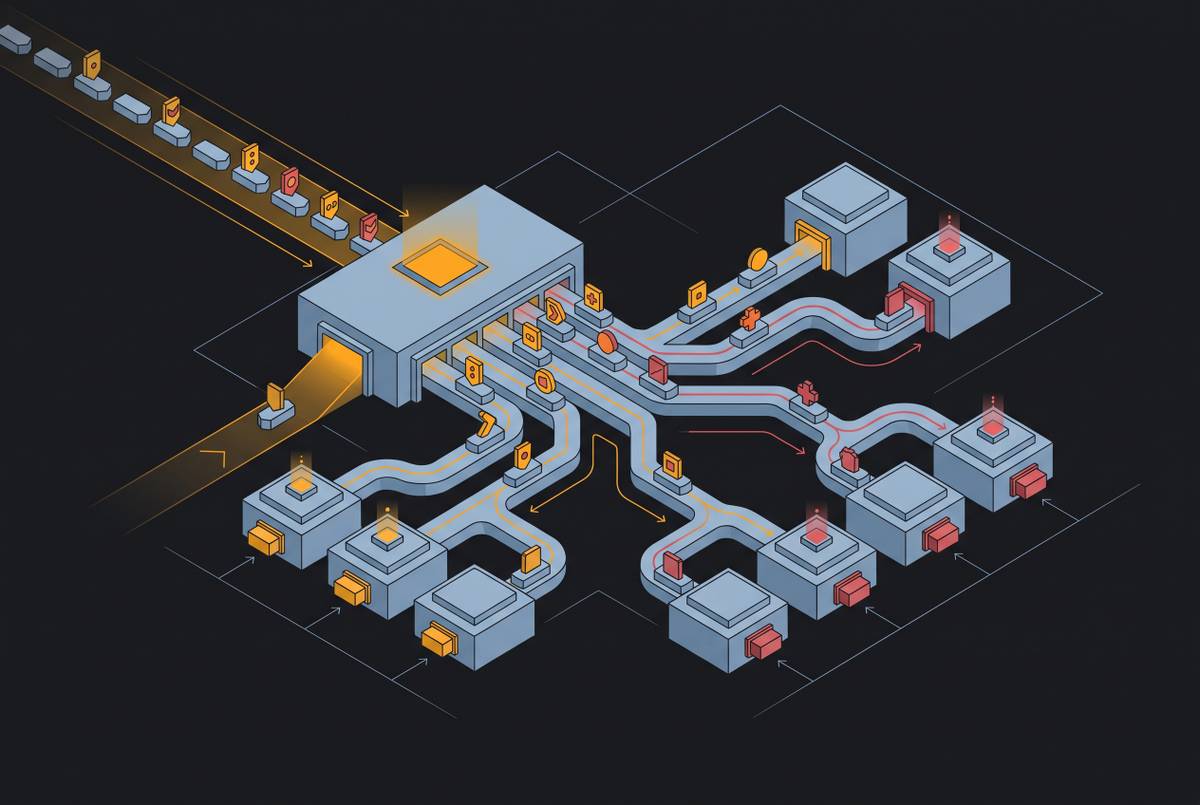
An LLM gateway is a reverse proxy between an application and its model providers. The application sends its request to the gateway, which applies authentication, routing, rate limits, and policy before forwarding it to a provider. The provider then executes the request. Telemetry about tokens consumed, model, provider, latency, and cost flows back into the gateway’s control plane before the response reaches the application.
That position makes the request the accounting unit. Rather than reconstructing activity from a provider total, the gateway can associate consumption with the team, project, and key attached to each transaction. This requires input and output token counts, because model costs depend on those counts. Portkey’s buyer guide describes unified API access, centralized governance, performance optimization, security, and monitoring as core gateway functions, with every request logged for auditability.
How can teams track AI costs by team and project across providers
A token count becomes useful when it identifies an owner. Team attribution shows which group is responsible for consumption, while project attribution shows which work that group paid for. Together, they answer which budget line owns a cost, rather than merely showing that a provider charged for it. Key attribution adds the service or developer that authorized the traffic. That distinction lets a security investigation follow the authorization behind a spike without treating all activity from one team as equivalent.
The model dimension lets engineering check whether a task has the right cost-quality tradeoff, while the provider dimension shows whether spending is split as planned. These dimensions must remain connected to the request so that an unexpected model or spending increase can be traced through the audit log. An aggregate total cannot provide that chain. TrueFoundry’s 2026 LLM gateway guide treats attribution by user, team, or project as a must-have criterion, on par with latency and multi-model fallback.
How real-time spend visibility changes budget enforcement from reactive to proactive
Once consumption is recorded against an owner, budget policy can influence the next request. A gateway can use per-team or per-project spend thresholds to throttle traffic or alert the responsible group before the billing cycle closes. These controls leave open the possibility of spending beyond a fixed maximum.
Per-key or per-model rate limits address a related problem by preventing one agent or workflow from monopolizing capacity. Spend-velocity alerts then show changes that a monthly total would hide, including a cost spike detected in minutes. Finance and security can read the same real-time dashboard instead of asking engineering to assemble a separate account of events.
The objection that token budgets are not outcome budgets is valid. A lower bill does not establish that a workflow produced more value, and a higher bill does not establish waste. Connecting cost to an outcome requires attribution to the feature or workflow that incurred that cost.
What the gateway must also handle: security and compliance controls at the same chokepoint
The same interception point can apply data policy before a request reaches a provider. PII and PHI redaction, zero-data-retention routing, role-based access, and immutable audit logs belong at this boundary because every provider call passes through it. Enforcing these protections in one place means less depends on each application getting them right.
Negotiated zero data retention is not the default on standard pay-as-you-go plans, so routing and retention policy need explicit treatment. The gateway can use detection and redaction with regex and named-entity recognition to apply the same policy to all models and teams. For healthcare and other regulated workloads, the gateway must be set up to meet the data-protection and access-control rules that apply, as well as the need for spend telemetry.
Records can identify the data category detected and redacted, guardrail event, model, team, and trace ID without storing the raw prompt or PII. This distinction is central to the architecture. An audit trail should support incident reconstruction without becoming another repository of the data the gateway was meant to protect.
Reliability as the third return on the same infrastructure: fallbacks and provider uptime
A gateway can also route requests to an alternate provider when the primary provider goes down. With a configured fallback chain, that change does not require an application code change. When an application calls a provider directly, it is exposed to that provider’s downtime. A 2026 production guide on DEV Community describes automatic provider failover through the same gateway mechanism that enforces cost controls and key management.
Central credentials reinforce this shared infrastructure model. A secure credential store replaces provider keys scattered across environment variables in multiple repositories and supplies the basis for attribution by key. Cost visibility, data governance, and reliability depend on different policies applied at the same request boundary.
How to evaluate a gateway on real-time spend visibility specifically
For a team evaluating candidates, the first question is whether spend can be viewed by team, project, key, model, and provider simultaneously. A dashboard that exposes only one dimension at a time may show a total without explaining its ownership. Teams should check whether that view updates per request or aggregates on a delay. Per-request reporting supports operational decisions, while delayed reporting supports retrospective review.
Teams should check whether recorded spend can trigger a throttle or alert before another request proceeds. Teams should check whether every request includes model, provider, token counts, key, and team without requiring stored prompt content. A team can test these points together by tracing a cost spike, because separate dashboard views do not show whether costs can be traced.
Teams should check whether provider billing formats become one comparable cost unit or still require manual reconciliation. TrueFoundry’s guide separately identifies real-time cost and usage insights and anomaly detection as an observability axis. Broader questions concern latency overhead, semantic caching, MCP support, and deployment model. Those influence the gateway decision but cannot substitute for timely, attributable cost records.
How managed and self-hosted gateways compare on delivering real-time spend visibility in practice
Self-hosting can give the team spend visibility and full control of its infrastructure. That control includes operating the database for spend records, the Redis coordination layer, monitoring, and incident response when the gateway fails. The accounting system becomes production infrastructure in its own right. Its cost includes both the gateway’s feature set and the work needed to keep attribution available.
LiteLLM, the most widely adopted open-source gateway, includes virtual keys and spend tracking in its open-source build. Its enterprise tier adds audit logs, RBAC, and SSO beyond the free allowance. LiteLLM documentation specifies that SSO is free for up to five users from version 1.76.0, with an enterprise license required beyond that threshold. At high volume, teams typically add PostgreSQL and Redis, while the Python GIL constrains single-process throughput.
The March 2026 LiteLLM PyPI compromise involving malicious versions 1.82.7 and 1.82.8 also showed what teams take on when they choose self-hosting. The team that owns the gateway also has to handle security patching and incident response. A feature comparison that excludes this work understates the deployment decision, even when the underlying software provides the required spend tracking.
A managed gateway transfers proxy operations to the provider. The application changes its base URL, and the team gets real-time spend dashboards without having to run the proxy infrastructure itself. Concentrate AI offers this model through one API across a wide range of models and dozens of providers, with attribution by team, project, key, model, and provider. It also provides automatic fallbacks, PII and PHI redaction, zero data retention, SSO, RBAC, and audit logs. A BAA is available on the paid plan for teams handling PHI.
Concentrate AI’s pricing has no markup, platform fee, card fee, or BYOK fee, and customers pay for tokens. Self-hosting may become more cost-effective at very high volume for a team with dedicated platform capacity and a need for full infrastructure control. Managed gateways offer lower total cost for most teams once engineering time, on-call work, and supporting infrastructure enter the comparison.
Standing up real-time spend visibility: the practical steps for a team running AI in production
For a production team, implementation begins with a routing decision. All model traffic should pass through one gateway endpoint, using a base URL change so that requests enter the control plane regardless of provider. This establishes the boundary on which attribution and policy depend. Traffic outside that path remains outside the gateway’s accounting view, so the endpoint decision precedes reliance on its totals.
Before traffic flows, the team should set up its taxonomy for team, project, and key. Those identifiers connect requests to the units responsible for spending and authorization. This must happen first because attribution for past requests cannot be recovered if the metadata was never attached. Once that ownership scheme is defined, spend alerts and per-key limits should be configured before the first production deployment. Controls installed after a spike cannot change the requests that caused it.
The next step is to give finance and security direct access to the spend dashboard. Their shared view should take the place of the meeting to explain the invoice, without adding another request for engineering to pull data. Cost by model and provider should then be reviewed weekly so that review follows changes in routing and model deployments. Granular records only support decisions when someone examines them at a useful cadence.
The final test is a cost spike. A team member who did not write the code should be able to identify within minutes which team, project, key, model, and provider drove it. The evidence should come from the gateway’s audit log.