Which Teams Are Overspending on Anthropic When OpenAI Would Cost Less for the Same Task
Task-level routing sends cheap work to budget models and reserves flagship tiers for reasoning.
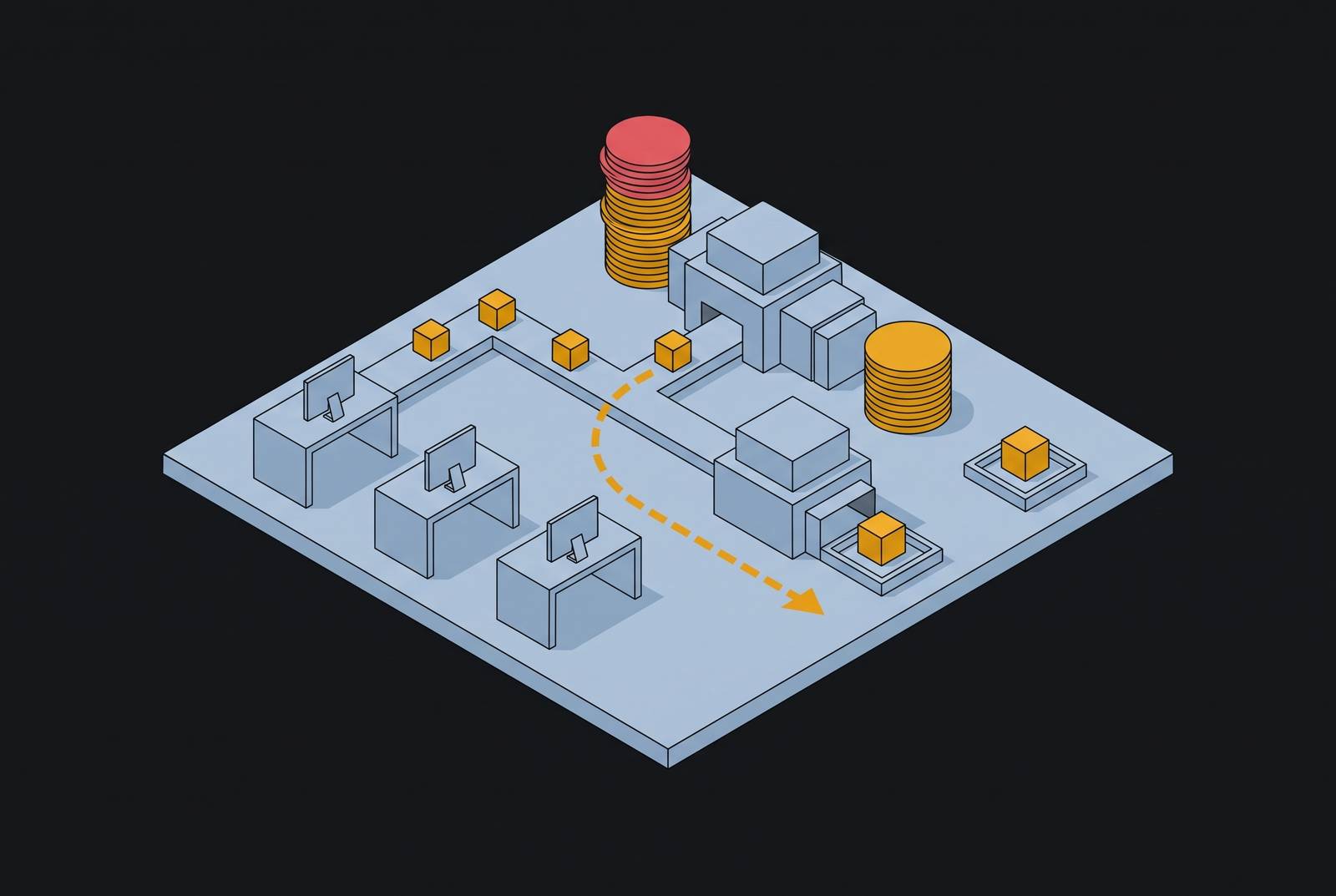
Overspending on Anthropic when OpenAI would cost less for the same task is usually a routing problem. To track AI API costs in real time by team and project, a shared gateway should attribute spend by team, project, key, model, and provider. With that view, teams can use task-level routing to send requests to cheaper models when they fit and keep them on Anthropic when the work needs its reasoning, caching, or context.
Why teams default to their most expensive model for every task
A formatting prompt sent to a flagship model pays for reasoning just to change the shape of text. A simple classification request has the same mismatch. Neither needs the skills that made the model a good choice during prototyping, but both use it when the integration goes into production unchanged. The default is one API key, one model, and all traffic. Without a separate routing decision, the most demanding task sets the model for every other request.
That default stays in place because nobody has to review it. Engineering teams choose a model to establish that an application works. The constraint is the absence of logic that distinguishes which requests warrant flagship capability and which do not.
Where Anthropic and OpenAI pricing has converged and where it has not
Anthropic and OpenAI list prices have converged at the mid and flagship tiers. Moving a request between identically priced tiers leaves the central question unanswered, which is whether the task needed that tier at all. OpenAI’s budget tier is substantially cheaper for suitable work, creating a gap that a flagship-to-flagship comparison misses. The useful comparison pairs the task’s quality requirement with the least expensive model that meets it.
Usage patterns can reverse the apparent advantage. Anthropic charges less for cached input at its top tier, so repeated context changes the comparison even when ordinary input and output rates match. Most current Anthropic models also have no long-context surcharge, although Claude Haiku 5.5 applies an elevated rate above a token threshold. OpenAI applies a multiplier to prompts beyond a threshold.
Which team functions consistently send the wrong task to the wrong model
Customer support and internal helpdesk teams generate strong candidates for cheaper routing through templated, low-ambiguity work. Intent classification, canned-reply drafting, and ticket summarization do not generally require deep reasoning. The cost of that mismatch adds up as teams make more calls. These requests are candidates for mid or budget tiers because their requirements are narrower than the capabilities of a flagship model. Routing eligibility depends on the task.
Product content pipelines create a similar mismatch for a different reason. Reformatting, tagging, and extracting structured fields from form submissions are mechanical operations where model quality differences can be negligible. Engineering teams also send short code explanations and inline documentation requests with well-defined output formats and verifiable correctness. Finance and analytics teams fit the same pattern when they ask for data summarization or report narration over structured input.
This taxonomy is not a ranking of departments. A team can have both mechanical requests and work that needs flagship reasoning. Long-document review, multi-step agentic reasoning, and cache-heavy agent loops are counter-cases that may belong on a flagship model or on Anthropic specifically. A longer context window can also eliminate chunking calls that would otherwise inflate OpenAI costs. Teams that work with many documents should therefore benchmark chunking overhead before re-routing, because extra calls for each document can eat up much of the expected saving.
How caching and prompt structure create hidden cost differences between providers
A repeated system prompt changes what a request costs. In cache-heavy agent loops, a large shared prompt can make cached input pricing more consequential than the ordinary input rate. Anthropic’s lower flagship cache-read pricing favors that traffic shape, including workflows whose teams never selected it for cost reasons. A move based only on list-price parity would overlook this advantage.
OpenAI’s long-prompt multiplier applies to both input and output, while most current Anthropic models avoid that surcharge. The Haiku exception prevents treating this as a universal rule. Where the surcharge applies on OpenAI but not on the chosen Anthropic model, processing a lengthy document in a single call can cost more on OpenAI for the same token count. Context capacity also affects whether that single-call comparison is possible at all.
Short, stateless requests have neither of those protections. They gain no cache benefit, and their brief prompts do not make long-context pricing a deciding factor. When OpenAI’s budget tier meets the quality bar for mechanical work, keeping it on an identically priced flagship tier costs more than the task needs. This is why traffic must be segmented by prompt shape. Choosing one provider for a whole department would group requests that cost less on different providers.
Why re-routing requires a gateway layer rather than a code change in each application
Telling each team to select a cheaper model leaves the original architecture intact. Each application still owns its API keys, SDKs, retry logic, and model selection. Every new routing rule then needs changes to the application, which gives teams another reason to keep the default until they have to act. To keep task-level routing working over time, teams need one shared decision point in place of choices they each have to maintain.
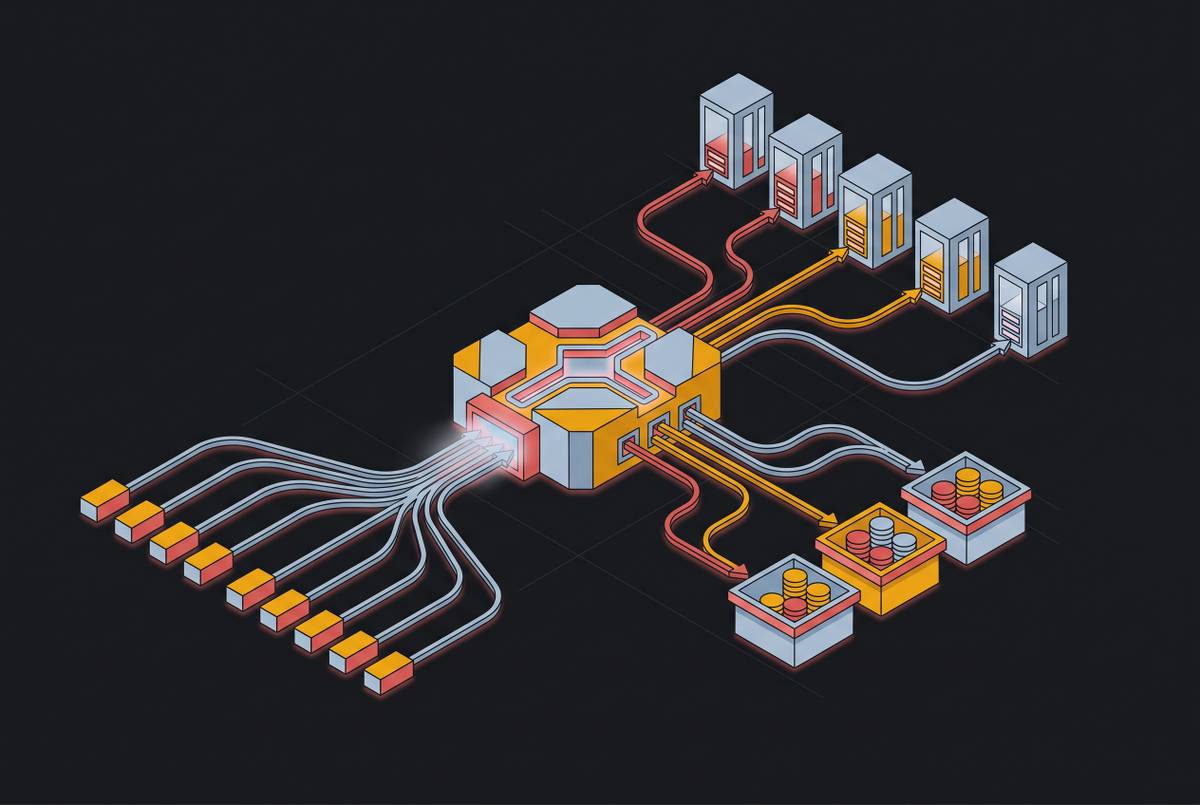
An LLM gateway provides that point between applications and providers. It exposes one API and brings routing, failover, spend tracking, and observability into a common layer. Because the gateway can inspect prompt length, team, project, and key, it can apply a rule before dispatching a request to a model and provider. Once applications use that layer, a routing change can be a configuration update.
A gateway can redirect requests when a provider is down or rate-limited, but reliability alone does not establish cost control. Fallback order also needs a policy. Without one, a cheap primary route can become a costly one when automatic failover takes over.
How can teams track AI spend in real time and put routing into practice?
A production routing approach starts with attribution. Spend needs to be visible by team, project, key, model, and provider, with task-type attribution that shows what the calls accomplish. Provider totals alone cannot distinguish mechanical work from legitimate reasoning expense. Real-time AI spend tracking by team, project, model, and provider gives finance and engineering a shared view of which workloads drive costs across integrations. That baseline makes a routing decision defensible before it becomes policy.
The next step is to classify traffic into high-reasoning, mid-complexity, and mechanical or high-volume work, then assign each class a model and provider. The gateway holds those rules. Access controls keep the policy from becoming optional. RBAC and virtual keys prevent teams from reverting to flagship models for convenience, while real-time spend visibility shows whether the policy is holding and where exceptions occur. A monthly invoice comes too late to rein in runaway spend as it happens.
Fallback governance extends the same discipline to degraded service. Chains should try cheaper options from the same provider first, then cheaper cross-provider options, and finally cross-provider premium options. A badly ordered fallback can triple spend during outages. Regulated teams also need PII and PHI redaction at the gateway before any request reaches a provider, because adding providers increases the attack surface.
Concentrate AI offers one concrete implementation of this architecture. It provides near-real-time spend visibility by team, project, key, model, and provider, with routing across a large catalog of models from 20+ providers. Automatic fallbacks, PII and PHI redaction, RBAC, and audit logs bring cost and governance controls into the same fully managed layer. Its pricing has no markup and no platform fee. For healthcare teams, it also offers a HIPAA-compliant option with a BAA on the paid plan.
The objection that cheaper models cost more when they fail
Cheaper models can increase total cost when they miss the quality bar and trigger a second call to a stronger model. The team pays for both attempts and has worse latency. This objection holds for deep reasoning, careful instruction-following, and multi-step agentic chains, which a routing policy should keep on flagship models that fit the work or on Anthropic. It does not invalidate routing for mechanical, high-volume, short-context work with verifiable outputs and low failure rates on mid and budget tiers. Before setting a rule, teams should run a representative sample of each task type through the models they are considering and measure output quality, so the route is based on the cost of getting the task done, including any attempts after the first.
How to audit current spend and identify the first tasks to re-route
A spend audit provides the practical starting point. If costs cannot be attributed by model, provider, and team, that visibility is the prerequisite. A gateway that captures those dimensions provides the starting point, with project and key attribution adding the detail needed across a multi-team organization. The audit should link that spend to the type of task. Without that connection, a large Anthropic bill reveals consumption but not whether the model selection was justified.
With attribution in place, teams should sort flagship traffic by request volume and prompt characteristics. High-volume tasks with short average prompts and templated output structures are the first candidates for cheaper routing. They expose the clearest capability mismatch in the baseline. Teams should assess agent loops with large repeated system prompts and long-context document workflows on their own, apart from the tasks they plan to move together. Their caching and context profiles may justify remaining on Anthropic despite list-price parity elsewhere.
Candidate tasks then need a quality check against the current baseline. A representative sample should go to the cheaper model, with an acceptable failure threshold set before production routing changes. Once a candidate meets the bar, the routing rule should be implemented at the gateway as a configuration update. Spend visibility can then show whether the intended policy holds across teams and projects.
The goal is not to minimize Anthropic usage. Some traffic belongs on OpenAI’s budget tier, while other traffic benefits from Anthropic’s reasoning, caching, or context characteristics. A shared gateway makes those decisions visible and deliberate, and the tooling to operate that layer already exists.